How to Dry Clothes Faster
There’s nothing worse than needing a shirt in twenty minutes and realizing it’s still damp on the hanger. Slow-drying laundry is one of those small annoyances that eats up way more of your day than it should.

The good news is, figuring out how to dry clothes faster doesn’t require a brand-new machine or some secret hack nobody’s heard of. It’s mostly about small adjustments — how you wash, how you load, and how you use the tools you already have.
This guide covers everything from dryer tricks to no-dryer options, so you can pick whatever fits your situation.
Table of Contents
- Why Laundry Takes Longer Than It Should
- How to Dry Clothes Faster: Quick Fixes Before You Start
- Best How to Dry Clothes Faster Tips for Your Dryer
- How to Dry Clothes Faster Without Using a Dryer at All
- Fabric-by-Fabric Drying Guide
- How to Dry Clothes Faster Near Me: Laundromats and Alternatives
- Tools That Genuinely Speed Things Up
- Mistakes That Quietly Slow You Down
- FAQs
1. Why Laundry Takes Longer Than It Should
Before chasing quick fixes, it helps to understand what’s actually causing the delay. In most homes, it comes down to three things: too much water left in the fabric after washing, poor airflow during drying, and mismatched load sizes.
Water is heavy, and wringing more of it out before drying even starts makes a bigger difference than people expect. Airflow matters too — a dryer or drying rack that’s packed too tight just can’t move air through the fabric efficiently.
Once you understand this, learning how to dry clothes faster becomes less about buying gadgets and more about working smarter with what you’ve already got.
2. How to Dry Clothes Faster: Quick Fixes Before You Start
A lot of the work happens before the dryer even turns on.
Use a High Spin Cycle on the Washer
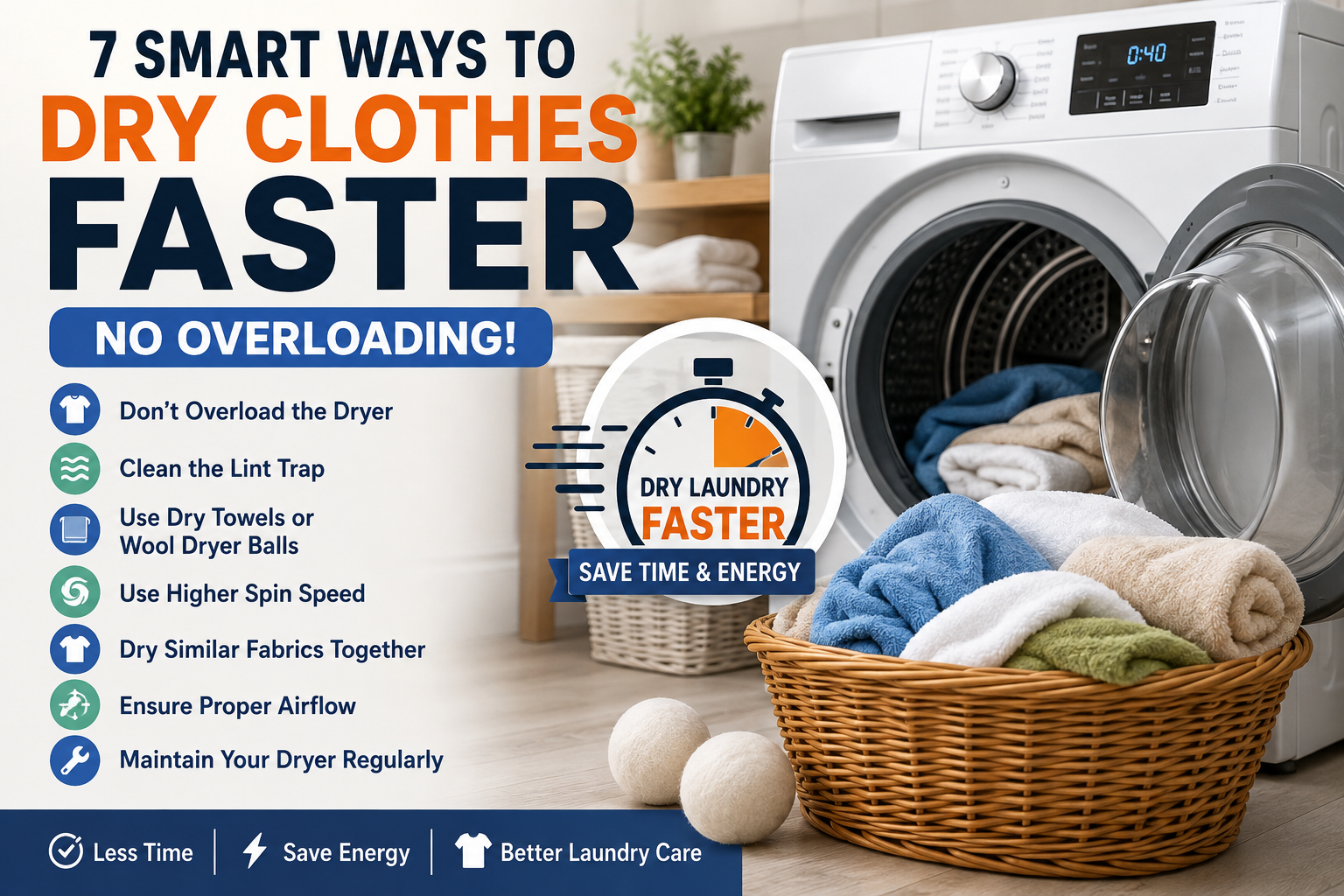
The spin cycle physically removes water through centrifugal force, which is far more efficient than trying to evaporate it later. Bumping your washer to a higher spin speed can knock several minutes off your total drying time.
Wring Out Hand-Washed Items
If you’re hand-washing anything, twist and squeeze out as much water as you reasonably can before it goes anywhere near a dryer or drying rack.
Separate Heavy and Light Fabrics
Towels and jeans hold onto water much longer than t-shirts or thin blouses. Drying them together means the light stuff finishes fast while the heavy stuff drags the whole cycle out.
Don’t Skip the Lint Trap
This one’s simple, but it’s often forgotten. A blocked lint trap restricts airflow immediately, and that alone can add 10–20 minutes to a cycle.
3. Best How to Dry Clothes Faster Tips for Your Dryer
If you’re mainly using a machine dryer, these are the best how to dry clothes faster tips worth trying.
Add a Dry Towel to the Load
A dry towel soaks up extra moisture and helps everything else dry more evenly. It sounds almost too simple, but it genuinely works.
Use Wool Dryer Balls
These bounce around the drum and help separate clothes, which improves airflow. They’re reusable, so they pay for themselves pretty quickly.
Keep the Load Below Three-Quarters Full
Clothes need room to tumble. If the drum is packed tight, hot air can’t reach every item evenly, and you end up with damp spots.
Choose the Right Heat Setting
Higher heat isn’t always faster in a meaningful way, and it can be rough on certain fabrics. Match the setting to what you’re drying — high for cottons and towels, medium or low for anything synthetic or delicate.
Run Loads Back-to-Back
A dryer that’s already warm from a previous cycle dries the next load faster, since it doesn’t need to build up heat from scratch.
4. How to Dry Clothes Faster Without Using a Dryer at All
Sometimes the fastest option isn’t a dryer at all — especially for smaller loads or delicate items.
Roll Clothes in a Towel
Lay a damp item flat on a dry towel, roll it up tightly, and press or step on it. This pulls out a surprising amount of moisture in just a minute or two, cutting air-drying time significantly.
Use a Fan
Point a regular household fan at clothes hanging on a rack. Moving air speeds up evaporation almost as much as heat does, without any risk of shrinking or damaging fabric.
Dry Near a Sunny, Ventilated Window
Sunlight and fresh airflow together can dry lightweight items in under an hour on a good day. It won’t work for everything, but it’s a great option for shirts and thin fabrics.
Space Items Out Properly
Whether it’s a drying rack or a clothesline, give each item room to breathe. Overlapping fabric traps moisture and slows the whole process down.
5. Fabric-by-Fabric Drying Guide
Different materials behave differently, so it helps to know what to expect.
Cotton
Absorbs a lot of water but dries reliably with heat. Higher settings work fine here.
Denim
Notoriously slow to dry because of its thickness. Turning jeans inside out can help hot air reach the inner layers faster.
Polyester and Synthetic Blends
These dry quickly on their own, but too much heat can warp or damage the fibers. Medium heat is usually the sweet spot.
Wool and Delicates
Best air-dried flat to avoid stretching. Rolling in a towel first (as mentioned above) speeds this up considerably.
Towels and Linens
Bulky and water-heavy. Give them their own cycle whenever possible, and consider a higher spin speed during washing.
6. How to Dry Clothes Faster Near Me: Laundromats and Alternatives
If your home setup just isn’t fast enough — maybe your dryer is older, or you’re drying bedding and bulky items — searching how to dry clothes faster near me usually leads people to a local laundromat.
Commercial dryers are typically more powerful than home units, and they can finish large loads in a fraction of the time. A few tips for making the most of it:
- Go during off-peak hours (mid-morning on weekdays tends to be quietest)
- Ask an attendant which machines are newest or run hottest
- Bring your own dryer sheets or wool balls — most laundromats don’t provide them
- Still avoid overstuffing, even in a bigger commercial machine
Some areas also have 24-hour laundromats, which can be a lifesaver if you’re drying something last minute, like a work uniform needed the next morning.
7. Tools That Genuinely Speed Things Up
Not every gadget is worth the money, but a few are genuinely useful.
- Wool dryer balls — improve airflow and reduce drying time by separating clothes
- A portable clothes-drying fan — speeds up air-drying dramatically, especially indoors
- A spin dryer (separate from your washer) — extracts extra water in just a couple of minutes, useful for hand-washed or delicate items
- A drying rack with mesh shelves — allows airflow from multiple angles instead of just one
None of these are expensive, and most pay for themselves within a few uses just by saving on energy costs and time.
8. Mistakes That Quietly Slow You Down
A few habits sneak in over time and end up working against you.
- Overloading “just this once.” It almost always backfires and adds an extra cycle.
- Mixing wet and damp items. Uneven moisture levels mean uneven drying.
- Ignoring the vent hose. A blocked exterior vent is one of the most overlooked causes of painfully slow drying.
- Using the same heat setting for everything. Delicates need a gentler touch than towels do.
- Skipping the lint trap. Even a light layer of lint restricts airflow more than people realize.
Fixing even one or two of these habits can noticeably cut down your total laundry time each week.
FAQs
1. What’s the single fastest way to dry clothes? Using a high spin cycle on the washer first, then drying at the right heat for the fabric with a dry towel added to the load, is usually the fastest combination without special equipment.
2. Does adding ice cubes to the dryer actually work? No — this is a common myth. Ice cubes melt into water almost immediately and don’t do anything to speed up drying. Skip it.
3. Is air-drying ever faster than a dryer? For small, lightweight loads on a warm day with good airflow, yes. A fan or sunny window can dry thin fabrics in under an hour, sometimes faster than a full dryer cycle.
4. How can I dry clothes faster near me if my dryer breaks down? A local laundromat with commercial dryers is usually the fastest backup option, especially for larger loads like bedding or towels.
5. Why do towels always take longer to dry than other clothes? Towels are thick and designed to absorb water, which means they hold onto more moisture than lighter fabrics. Drying them separately, and using a higher spin speed in the wash, helps speed things up.
At the end of the day, learning how to dry clothes faster isn’t about one magic trick. It’s a mix of small habits — spinning out more water upfront, giving clothes room to tumble, matching heat to fabric type, and knowing when a laundromat is the smarter call. Try a few of these on your next load, and laundry day will start to feel a lot less like a waiting game.